This post may contain affiliate links, which means we may earn a small commission if you make a purchase through our links, at no extra cost to you. This helps us keep creating great content. Thank you for your support!
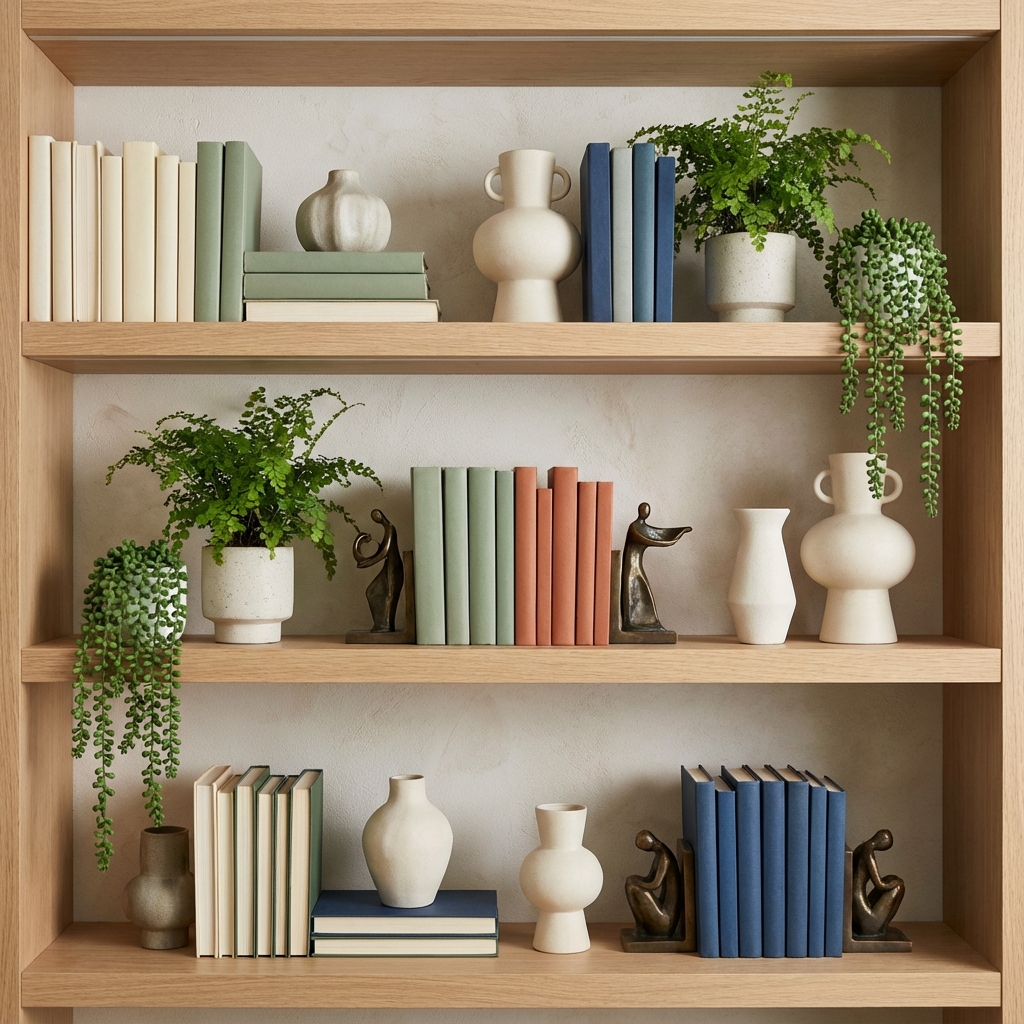
Bookshelf styling is an art that combines practical storage with aesthetic appeal, transforming functional furniture into stunning design statements. Whether you're working with a traditional bookcase, floating shelves, or built-in units, mastering these proven techniques will elevate your space from ordinary to extraordinary.
How to Style a Bookshelf Like a Professional Designer
Professional bookshelf styling follows these key principles:
- Follow the Rule of Thirds - 2/3 books, 1/3 decorative objects
- Vary Heights and Orientations - Mix vertical and horizontal book placement
- Create Color Coordination - Group books by color for visual impact
- Add Negative Space - Leave some areas empty for visual breathing room
- Include Personal Touches - Display meaningful objects and artwork
The Foundation: Smart Bookshelf Organization
Start with a completely clean slate. Remove everything from your shelves and sort items into four categories: books, decorative objects, plants, and storage containers. This crucial process helps identify what you have and reveals what additional stylish storage solutions like rattan baskets might be needed to achieve your desired look.
What Items Should You Put on a Bookshelf Besides Books?
The best bookshelf displays combine books with carefully chosen decorative elements:
- Plants and greenery - Add life and natural texture (see our guide on bookshelves for plants)
- Picture frames - Display family photos and artwork
- Decorative objects - Sculptures, vases, and collectibles
- Storage baskets - Hide clutter while adding texture
- Candles and lighting - Create ambiance and visual interest
- Bookends - Functional pieces that can be decorative
Professional Design Principles for Stunning Bookshelves
The Rule of Thirds: Creating Perfect Balance
Divide your shelf space mentally into thirds for optimal visual impact. Fill approximately two-thirds with books and one-third with decorative elements. This proven ratio creates visual balance and prevents the overwhelming "library look" while maintaining the shelf's primary function.
Color Coordination That Captivates
Color-coordinated book arrangements create striking visual impact that immediately draws the eye. Group books by color families, create ombre effects, or alternate between different color groupings. This technique works especially well for modern and minimalist interiors, adding sophistication without clutter.
Mixing Orientations for Visual Rhythm
Combine vertical book stacking with horizontal piles to create dynamic visual rhythm that keeps the eye engaged. Place decorative objects or small plants on top of horizontal book stacks to add crucial height variation and visual interest. Decorative bookends with built-in planters serve this dual purpose beautifully while saving space.
Smart Storage Integration That Looks Intentional
Decorative rattan storage baskets and stylish boxes serve dual purposes on bookshelves—they hide everyday clutter while adding texture and warmth to the display. For a more modern approach, try clear acrylic display stands that showcase special books like precious art pieces.
Advanced Professional Styling Techniques
Creating Focal Points That Command Attention
Every expertly styled bookshelf needs a hero moment—a special area that draws attention and anchors the entire display. Professional designers use the "triangle technique": create three visual anchors across your shelving unit using your most striking pieces. This could be a collection of vintage leather-bound books, a statement piece of art, or a cascading plant that adds life to your arrangement.
The Power of Strategic Negative Space
Don't fill every inch—this is the mark of amateur styling. Strategic empty space allows the eye to rest and makes your carefully chosen items appear more valuable and intentional. Professional designers follow the 70-30 rule: 70% filled space, 30% negative space for optimal visual impact.
Room-by-Room Bookshelf Styling Strategies
Living Room Bookshelves: Entertainment and Elegance
Living room bookshelf styling should balance entertainment value with sophisticated aesthetics. Include coffee table books for casual browsing, decorative storage baskets for remotes and games, and accent lighting to create ambiance. Use warm metallics like brass or copper for a cozy, inviting feel.
Bedroom Bookshelves: Personal Sanctuary Styling
Bedroom shelving should feel peaceful and personal. Focus on softer color palettes, incorporate plants for air purification, and include personal photographs in beautiful frames. Clear acrylic display stands showcase special books while maintaining visual lightness essential for restful spaces.
Home Office Bookshelves: Function Meets Form
Office shelving must balance professional appearance with daily functionality. Organize reference books by frequency of use, incorporate stylish storage solutions for supplies, and add plants to improve air quality and reduce stress. Use consistent spine colors or book covers to create visual calm.
Styling Different Types of Bookshelf Configurations
Built-In Bookshelf Styling
Built-in units offer maximum impact potential but require careful planning. Create visual flow by repeating elements across multiple sections—use the same plants, similar decorative objects, or consistent color themes. Vary the styling intensity: some sections can be densely styled while others remain more minimalist for visual rhythm.
Floating Shelf Arrangements
Floating shelves demand lighter styling approaches since they appear to float without visual support. Focus on horizontal arrangements, use books as platforms for lighter objects, and maintain consistent spacing between shelves. Wall-mounted bookends with plant holders add functionality while maintaining the clean, floating aesthetic.
Corner Bookshelf Maximization
Corner units require special attention to prevent dead zones. Use the corner space for taller items like plants or sculptures, and ensure each shelf level offers visual interest from multiple viewing angles. Corner bookshelves work beautifully with cascading plants that can wrap around edges.
Color Psychology in Bookshelf Styling
Cool Color Schemes for Calm Environments
Blues, greens, and purples create serene, contemplative environments perfect for reading nooks and bedrooms. These colors recede visually, making shelves appear deeper and more spacious. Mix different shades within the same color family for sophisticated monochromatic displays.
Warm Color Schemes for Cozy Gathering Spaces
Reds, oranges, and yellows create inviting, energetic atmospheres ideal for living rooms and family spaces. These advancing colors make spaces feel more intimate and conversation-friendly. Balance warm book spines with neutral decorative objects to prevent overwhelming visual intensity.
Neutral Palettes for Timeless Elegance
Whites, grays, beiges, and blacks create sophisticated, timeless displays that work with any decor style. Neutral color schemes allow decorative objects and plants to become the stars while maintaining visual calm. This approach works especially well in modern and minimalist interiors.
Seasonal Bookshelf Styling Updates
Spring and Summer: Fresh and Light
Lighten your display with fresh flowers, bright book covers, and airy decorative objects. Incorporate natural textures like rattan storage baskets and wooden elements. Add plants with flowing or trailing habits that suggest growth and renewal.
Fall and Winter: Cozy and Rich
Embrace deeper colors, add warm lighting through candles or small lamps, and include textured elements like woven baskets or ceramic objects. Layer in books with rich, warm-toned spines and add seasonal elements like small gourds or pinecones for natural beauty.
Common Bookshelf Styling Mistakes to Avoid
The "Library Wall" Error
Filling every inch with books creates visual monotony and missed opportunities for personality and visual interest. Professional designers never create solid walls of books—they always break up the pattern with decorative elements and negative space.
Scale and Proportion Mismatches
Using tiny decorative objects on large shelves makes them appear lost and insignificant. Choose decorative elements that are proportionally appropriate for your shelf depth and height. Large shelves need substantial decorative pieces to maintain visual balance.
Ignoring Lighting Considerations
Dark corners and poorly lit shelves waste styling effort. Consider adding accent lighting through small LED strips, picture lights, or strategically placed table lamps to highlight your beautiful arrangements and make books easier to read.
Forgetting Maintenance and Accessibility
Over-styling can make books difficult to access and shelves impossible to clean. Maintain easy access to frequently used books and leave some space for new additions. Your bookshelf should serve your lifestyle, not hinder it.
Budget-Friendly Bookshelf Styling Tips
DIY Decorative Elements
Create custom book covers using wrapping paper or fabric for instant color coordination. Make your own bookends using decorative stones or vintage finds. Propagate plants from cuttings to fill your shelves with greenery at minimal cost.
Shopping Your Home First
Before purchasing new decorative items, gather objects from throughout your home. Vases, picture frames, candles, and small sculptures can find new life on bookshelves. This approach ensures your display feels authentically personal rather than store-bought.
Thrift Store and Vintage Finds
Second-hand stores offer unique decorative objects with character and history. Look for vintage books with beautiful spines, interesting ceramics, and one-of-a-kind sculptures that add personality to your displays without breaking your budget.
Remember, the most beautiful bookshelf styling reflects your personality while serving your daily needs. These aren't museum displays—they're functional art that should make your everyday life more beautiful and organized. Professional styling techniques can be adapted to any budget, space size, or personal aesthetic preference. Start with the basics and layer in complexity over time for the most authentic and sustainable results.
If you're working with limited space, check out our small space design secrets for professional tips on making any room feel larger, and explore our comprehensive guide to home organization systems that complement your beautiful new displays.
Frequently Asked Questions About Bookshelf Styling
How do you style a bookshelf to look professional?
Follow the rule of thirds: fill 2/3 with books and 1/3 with decorative objects. Vary heights by mixing vertical and horizontal book placement, create color coordination by grouping books by color, and include negative space for visual breathing room.
What decorative items look good on bookshelves?
The best decorative items include plants, picture frames, candles, decorative storage baskets, sculptures, and bookends. Choose items that reflect your personality while maintaining visual balance with your book collection.
Should you organize books by color or subject?
For styling purposes, organizing by color coordination creates the most visual impact. However, if you frequently reference your books, organize by subject within color groups to maintain both beauty and functionality.
How many decorative objects should be on each shelf?
Aim for 1-3 decorative objects per shelf, depending on shelf size. Use the rule of odd numbers—groups of 1, 3, or 5 objects create more visual interest than even-numbered arrangements.
What's your biggest bookshelf styling challenge? Share a photo of your current setup and let us help you transform it into something spectacular!